Primary National Curriculum England 2014
The national curriculum for mathematics aims to ensure that all pupils:
- become fluent in the fundamentals of mathematics, including through varied and frequent practice with increasingly complex problems over time, so that pupils develop conceptual understanding and the ability to recall and apply knowledge rapidly and accurately.
- reason mathematically by following a line of enquiry, conjecturing relationships and generalisations, and developing an argument, justification or proof using mathematical language
- can solve problems by applying their mathematics to a variety of routine and non-routine problems with increasing sophistication, including breaking down problems into a series of simpler steps and persevering in seeking solutions.
At Pennyhill, we believe that every child can succeed in mathematics. We want our pupils to become confident, curious and resilient mathematicians who enjoy solving problems, explain their thinking and can demonstrate flexibility in all they do. We follow the National Centre for Excellence in the Teaching of Mathematics (NCETM) Mastery Approach to teaching maths.
The NCETM believe that mastering maths means “pupils of all ages acquiring a deep, long-term, secure and adaptable understanding of the subject.” By teaching for mastery, we are providing crucial elements of classroom practice and school organisation, which when combined, give pupils the best chances of mastering maths.
The importance of Mathematics
Mathematics is a creative and highly inter-connected discipline that has been developed over centuries, providing the solution to some of history’s most intriguing problems. It is essential to everyday life, critical to science, technology and engineering, and necessary for financial literacy and most forms of employment. A high-quality mathematics education therefore provides a foundation for understanding the world, the ability to reason mathematically, an appreciation of the beauty and power of mathematics, and a sense of enjoyment and curiosity about the subject.
Intent:
At Pennyhill, our intent is to deliver a high-quality mathematics curriculum that is accessible to all and enables every child to achieve their full academic potential. We aim to develop confident, resilient mathematicians who enjoy challenge and are able to reason, problem-solve and think critically.
Our curriculum is designed in line with the NCETM’s Mastery approach and supported with White Rose Maths Hub. All lessons are adapted to ensure a personalised approach for each class as we believe that all children can succeed in maths with the right support and challenge. By carefully sequencing learning into small steps, we ensure progression and coherence across year groups. We are committed to high expectations for all, providing timely support so that children keep up rather than catch up. Challenge is provided through depth, reasoning and rich mathematical content.
Impact:
The impact of our mathematics curriculum is that children:
- Demonstrate secure and deep understanding of mathematical concepts.
- Recall key number facts with accuracy and efficiency.
- Use Mathematical vocabulary confidently and accurately
- Develop positive attitudes towards mathematics and a belief that they can succeed.
As a result, children leave our school with the mathematical understanding, resilience and enthusiasm needed for the next stage of their education.
What does a Mastery Maths Lesson look like?
In our classrooms, you will see:
- Small step learning
Lessons are broken down into small, manageable steps so that every child can succeed and build confidence.
- Whole class teaching
All children are learning the same key objective through discussion, representation and questioning.
- Concrete – Pictorial – Abstract (CPA)
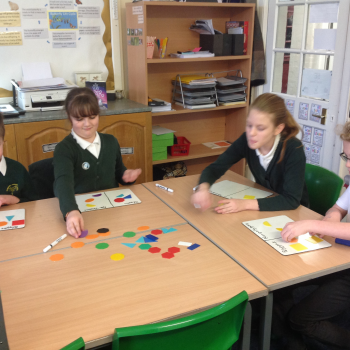
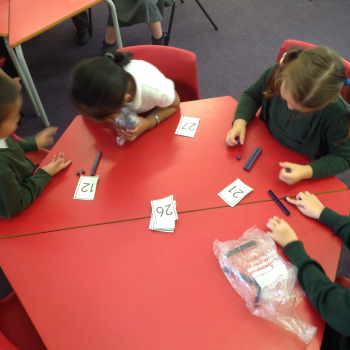
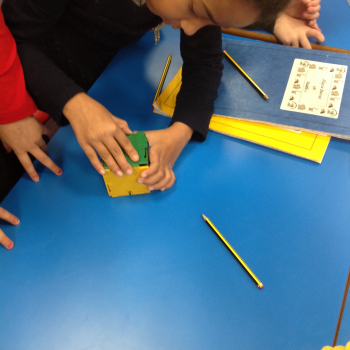
Concrete: Using physical resources (e.g. counters, cubes, place value charts)
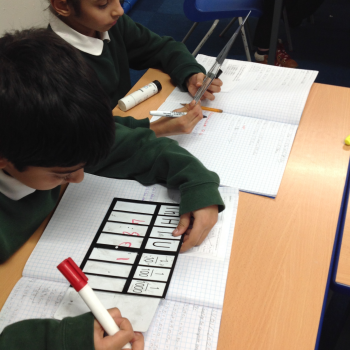
Pictorial: Drawing diagrams and using visual representations
Abstract: Using numbers, notation and symbols.
These allows teachers to expose the structure of mathematics to ensure all children fully understand mathematical concepts rather than simply memorising procedures.
- Mathematical talk
Children are encouraged to explain their thinking using full sentences and correct mathematical vocabulary. Sentence stems are used to help children articulate their reasoning clearly.
- Challenge for all
We deepen understanding through: rich problems, open-ended tasks, multiple representations or explaining and proving answers.
Mastering Number:
At Pennyhill, we have partnered with the NCETM to embed their Mastering Number programme from EYFS through to Year 5. The aim of this programme is to ensure that all children leave their respective key stage with a sound, flexible number sense and are secure in their age-related number facts. By having a swift recall of number facts reduces children’s cognitive load in Maths lessons and allows children to focus their working memory on applying and understanding new concepts.
Supporting at home:
We recognise that parents and carers play a vital role in supporting children to become confident and fluent mathematicians. In line with our mastery approach and the principles promoted by the NCETM, regular practice, discussion and retrieval of key knowledge at home can significantly strengthen long-term understanding.
Below are links to platforms we use and recommend:
Numbots
- Develops number bonds, addition and subtraction fluency.
- Little and often practice helps secure mental calculation skils.
- Link to log in page:
- https://play.numbots.com/#/account/school-login/15782Link to Parents’ Guide:
- https://static.numbots.com/data/pdf/NumBotslaunchparentguide.pdf
Times Tables Rock Stars
- Supports rapid recall of multiplication and division facts.
- Short, regular practice sessions (5-10 minutes, 3-4 times a week) are most effective.
- Encourage your child to improve their speed while maintaining accuracy.
- Teachers can provide heatmaps which will enable you to focus on key facts to better support your child.
- Link to log in page: https://play.ttrockstars.com/auth/school/student/15782
- Link to Parents’ Guide: https://ttrockstars.com/parents/
DoodleMaths
- Provides personalised practice tailored to your child’s strengths and next steps.
- Supports fluency, reasoning and problem solving across the primary curriculum.
- Regular use (10 minutes a day) helps to consolidate classroom learning and address misconceptions.
- DoodleMaths log in page: https://students.doodlelearning.com/
- DoodleMaths Parents’ Guide: https://help.doodlelearning.com/en/collections/6984875-how-to-for-parents
For further guidance on how to support your child at home, useful links are provided below:
White Rose Maths Hubs – Home learning support for Parents Home Learning | White Rose Maths
BBC Bitesize SATs support Primary SATs – Maths SATs – English SATs – KS1 SATs – KS2 SATs – BBC Bitesize – BBC Bitesize
Practical Ways to Support at Home
In addition to online platforms, parents can:
- Practise number bonds and times tables regularly.
- Ask children to explain how they worked a problem out.
- Use everyday maths opportunities (shopping, cooking, measuring, telling the time).
Consistent, short practice sessions are more effective than occasional longer ones. If you are unsure about methods taught in school please contact your class teacher – we are always happy to help.